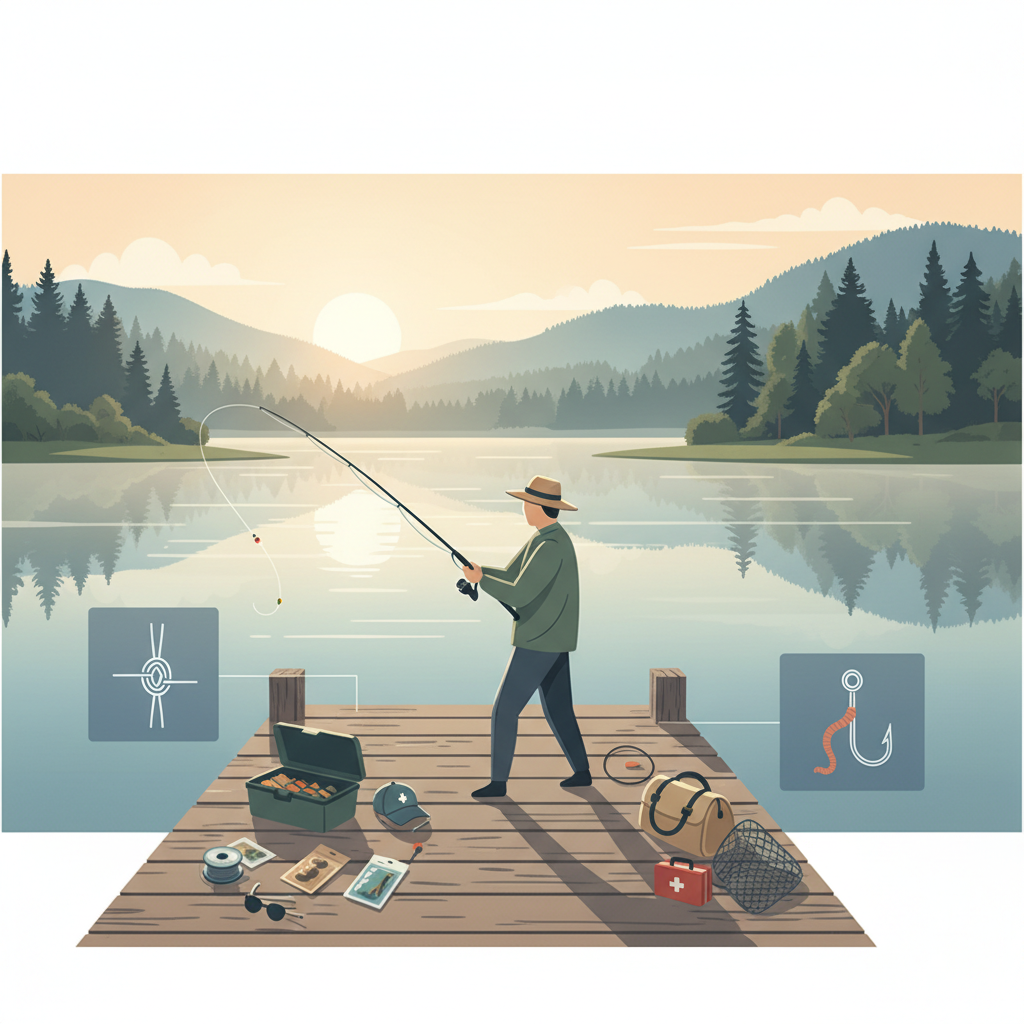



How to Release a Fish Properly: Catch-and-Release Handling Basics
Letting a fish go is not the same thing as a fish surviving. NOAA Fisheries puts it plainly: simply letting a fish go does not guarantee it will live, and the actions you take before, during and after you land a fish can improve its chances of survival. The habits that help are simple and easy to learn. This guide pulls together the advice that fisheries agencies publish for anglers, so you can build a release routine before you need it.
One note before the details: agencies do not all give identical advice. Some recommendations differ by species, by depth and by state, and a few details conflict from one agency to the next. Where that happens below, we say so. Your state fish and wildlife agency's current rules always come first.
Start with the gear you choose
Good releases begin before the fish is hooked. NOAA Fisheries' catch-and-release guidance recommends circle hooks, barbless hooks or hooks with crimped barbs, which it says can improve survival and make removal easier. It also lists non-stainless steel hooks, because they corrode and fall out over time if a fish or other wildlife is accidentally hooked and escapes before it can be dehooked. Texas Parks and Wildlife likewise tells anglers to consider barbless hooks.
Your tackle matters too. NOAA advises using tackle strong enough to land the fish you are targeting quickly, and says never to fight a fish to exhaustion. Texas Parks and Wildlife warns that playing a fish to exhaustion can harm it, and the Wisconsin Department of Natural Resources makes a similar point when it tells anglers to land the fish as quickly as possible.
Two pieces of equipment are worth keeping within reach:
- A release tool. Texas Parks and Wildlife suggests needle-nose pliers, hemostats or a hook remover, and says to keep your release tools close by. NOAA says release tools such as a dehooker minimize handling and make it easier to release a fish without removing it from the water.
- A soft net, if you use a net at all. NOAA recommends a wet, soft, knotless mesh or rubber landing net because it does less damage to a fish's eyes, fins, scales and protective mucus coating. Wisconsin's DNR also encourages the use of rubber nets and cradles. Texas says to keep the fish from thrashing without using a net if possible, and if a net is required, to use a rubber-mesh landing net instead of abrasive nylon. NOAA's advice is never to gaff a fish you plan to release.
Keep the fish in the water as much as you can
One tip that all three agencies repeat is to minimize the time a fish spends out of the water. The numbers they give are consistent:
- NOAA says less than 60 seconds out of the water is ideal.
- Wisconsin's DNR recommends sticking to 60 seconds of exposure or less.
- Texas Parks and Wildlife offers an easy rule of thumb: keep the fish out of the water no longer than you can hold your breath.
Even better, do not lift the fish at all if you do not have to. NOAA advises dehooking fish in the water when possible, and Texas suggests leaving the fish in the water and using a tool to remove the hook. Texas also advises keeping the fish off the ground or the floor of a boat.
Wet your hands, and be careful how you hold the fish
Texas Parks and Wildlife says to avoid removing the slime layer, which protects fish from parasites and infections, and recommends using wet hands, a wet rag or a glove before handling the fish. NOAA says to handle fish as little as possible and only with wet hands, and to avoid touching the eyes and gills. Texas gives the same warning about keeping fingers out of the eyes and gills.
How you hold the fish is where agency advice differs, so it is worth understanding why:
- NOAA says to support the weight of any fish removed from the water along the length of its body, and never to suspend a fish by its lip or mouth.
- Texas Parks and Wildlife says fish under 5 pounds can be held vertically by the lower jaw, while larger fish should be supported horizontally with two hands.
- Wisconsin's DNR says to always use two hands to support a fish.
Texas ties its advice to the size of the fish, and it points anglers to separate pages for black basses and other large freshwater species. If you are unsure which advice applies, start with the points where the agencies overlap: wet hands (NOAA and Texas), short air exposure (all three), and two-handed support for larger fish (Texas and Wisconsin).
Removing the hook
Texas Parks and Wildlife suggests setting the hook quickly to reduce the likelihood that the fish will swallow the bait. When you remove a hook, Texas advises backing it out the same way it went in, and not jerking or popping the leader to break it, since that can injure internal organs.
Some hooks are too deep to remove safely. NOAA says that if a swallowed hook cannot be easily removed, you should cut the line as close to the hook as possible. The U.S. Fish and Wildlife Service says not to tear the hook out and to cut the line as close to the mouth as possible. Wisconsin's DNR gives the same instruction for deeply hooked fish: cut the line and let the fish go. If you fish for muskellunge, Wisconsin's musky release guidance also suggests carrying a wire cutter or small bolt cutter that can cut your heaviest hooks.
Special case: fish brought up from deep water
Fish caught in deep water can suffer barotrauma, a pressure-related injury caused by gases expanding inside the fish as it is brought up. NOAA Fisheries' Return 'Em Right program describes signs that include bulging eyes, a bloated midsection, bubbling scales, and a stomach pushed out through the mouth, and explains that the expansion of gases in the fish's tissues makes it difficult for the fish to swim back down.
The depth at which this becomes a concern depends on the source and species. The Return 'Em Right page, which focuses on Gulf and Southeast reef fish, says fish caught in water 50 feet or shallower usually survive release when handled properly, while fish reeled up from deeper than 50 feet likely need extra help. NOAA's general catch-and-release page says a fish caught deeper than 30 feet will generally suffer some effects of barotrauma. Treat those figures as a reminder that depth matters, not as a precise line.
For a fish showing no signs of barotrauma, the Return 'Em Right guidance is to use a dehooking device to release it as quickly as possible. For a fish that does show signs, it says to dehook the fish with a dehooking device when appropriate and descend it, or vent it if descending is not feasible. NOAA's catch-and-release page says the best way to help a fish with barotrauma survive is to release it quickly at depth, using recompression tools such as descender devices, release weights or release baskets, and that venting should follow established guidelines. Learn those guidelines, and your local rules, before you try either technique. Texas Parks and Wildlife also advises bringing a fish up slowly in deep water so it can adjust to pressure changes.
Reviving the fish
A tired fish needs help before you let go. The agencies describe a similar approach. NOAA suggests facing the fish into the current, or pulling it head-first through the water, until it can swim away on its own. Texas Parks and Wildlife says to resuscitate an exhausted fish by moving it or facing it into the current, gently forcing water into the mouth and over the gills. The U.S. Fish and Wildlife Service says you can revive a fish by gently moving it back and forth in the water so that water runs through its gills. Wisconsin's DNR says to hold the fish upright in the water and let it regain its strength.
Check the rules before you go
Catch-and-release is not a loophole. Some fisheries require specific hooks, and NOAA notes that some require circle hooks. Wisconsin's DNR, for its part, advises anglers to apply deeply hooked fish to their bag limit and release the fish that have a good survivable hookup. Minimum sizes, closed seasons and gear restrictions vary by state, so read your state's current regulations before you fish, including how they treat fish you plan to release.
A simple release checklist
- Use hooks and tackle that let you land the fish quickly.
- Keep a dehooker or pliers where you can reach them.
- Wet your hands before touching the fish.
- Keep the fish in the water for the dehooking if you can.
- Keep any time out of the water under a minute.
- Support the fish's body (Wisconsin's DNR says to use two hands), and keep fingers away from eyes and gills.
- If the hook is too deep, cut the line close to the hook.
- For deep-water fish, be ready with a descending device and know the local rules.
- Revive the fish facing the current, and let it swim away on its own.
None of this takes much extra time once it becomes habit, and it gives the fish you let go the best chance of being there for the next angler.
Sources
- NOAA Fisheries, "Catch and Release Fishing Best Practices": https://www.fisheries.noaa.gov/national/resources-fishing/catch-and-release-fishing-best-practices
- NOAA Fisheries, "Return 'Em Right best release practices manual available to recreational anglers": https://www.fisheries.noaa.gov/feature-story/return-em-right-best-release-practices-manual-available-recreational-anglers
- Texas Parks and Wildlife Department, "Catch & Release Tips": https://tpwd.texas.gov/regulations/outdoor-annual/fishing/catch-release-tips
- Wisconsin Department of Natural Resources, "Responsible catch and release": https://dnr.wisconsin.gov/topic/Fishing/outreach/ResponsibleRelease.html
- U.S. Fish and Wildlife Service, "A Guide to Fishing for the First Time": https://www.fws.gov/story/guide-fishing-first-time